
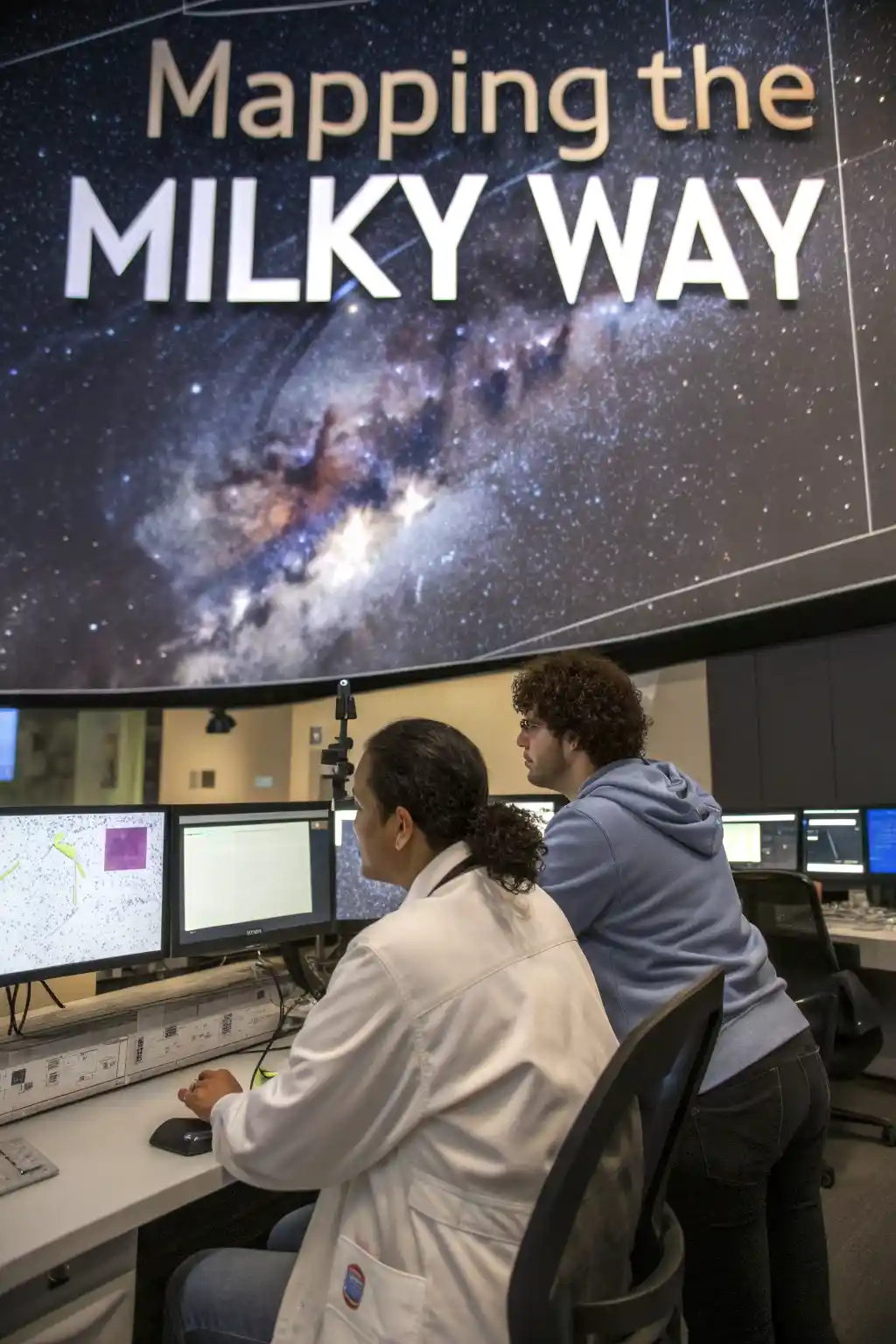
Mapping the Milky Way: Unveiling the Cosmos Through Gaia’s Lens
Original price was: $4.99.$2.99Current price is: $2.99.
Explore the Milky Way like never before! This E-book unveils how the Gaia space observatory revolutionized our understanding of our galaxy. A must-read for space enthusiasts, this book simplifies galactic mysteries with engaging, clear explanations.
Mapping the Milky Way: Unveiling the Cosmos Through Gaia’s Lens (E-Book Details)
The Milky Way Galaxy has long fascinated scientists and space enthusiasts alike. For centuries, astronomers have sought to understand its vast structure, complex motions, and hidden mysteries. With the launch of the Gaia space observatory by the European Space Agency (ESA), humanity has gained an unprecedented ability to map and study our galaxy in extraordinary detail.
This book, “Milky Way Mapping with Gaia: A Deep Dive into Our Galactic Home,” explores the groundbreaking discoveries made possible by Gaia’s data. By mapping over 1.8 billion stars, Gaia has provided the most precise 3D representation of the Milky Way, allowing us to unlock new insights into stellar evolution, dark matter, and the galaxy’s future.
The Scale and Composition of the Milky Way
The Milky Way is a barred spiral galaxy spanning approximately 100,000 light-years in diameter. Scientists categorize it into four main components:
- Galactic Disk – Contains most of the Milky Way’s stars, including our Sun.
- Galactic Bulge – A dense, spherical region at the center of the galaxy.
- Halo – A vast, spherical region surrounding the disk, populated with older stars and dark matter.
- Spiral Arms – Star-forming regions extending outward from the central bulge.
Gaia’s data has refined our understanding of these structures, revealing hidden stellar streams and previously unknown patterns in the galaxy’s composition.
The Gaia Mission: A Revolution in Astronomy
Gaia’s mission is to create the most detailed star catalog ever assembled. It does this by:
- Measuring stellar positions with extreme precision.
- Tracking star movements to understand how the galaxy evolves.
- Analyzing star brightness and composition to study their life cycles.
The observatory operates from the Lagrange Point 2 (L2), where it avoids Earth’s atmospheric interference. This allows Gaia to continuously scan the sky, gathering vast amounts of data.
The Art of Star Mapping: How Scientists Measure the Cosmos
Gaia uses three key techniques to map the galaxy:
- Parallax – Determines the distance to stars by measuring their apparent shift as Earth orbits the Sun.
- Proper Motion – Tracks how stars move relative to each other over time.
- Radial Velocity – Measures how fast a star is moving toward or away from us, using the Doppler effect.
By combining these measurements, astronomers can construct a three-dimensional model of the Milky Way and analyze how its stars are distributed and moving.
The Structure of the Milky Way: A Galactic Blueprint
Gaia’s data has led to major revelations about the dynamics of the Milky Way:
- The galactic disk is not flat but rather warped and oscillating, likely due to past interactions with satellite galaxies.
- The spiral arms contain stellar streams that trace the Milky Way’s history of mergers and collisions.
- The halo contains ancient stars, providing clues about the earliest stages of galaxy formation.
These findings are reshaping our understanding of how the Milky Way has evolved over billions of years.
Dark Matter and the Milky Way’s Hidden Forces
One of the greatest mysteries in astrophysics is dark matter—an invisible substance that makes up about 85% of the universe’s total mass. While dark matter cannot be directly observed, Gaia’s data allows scientists to infer its presence by analyzing how stars move.
Key insights from Gaia’s observations:
- Stars in the outer regions of the galaxy move faster than expected, suggesting the presence of unseen mass.
- Gravitational lensing effects hint at the distribution of dark matter in the Milky Way’s halo.
- Galactic tidal streams provide indirect evidence of dark matter interactions.
Gaia’s precision measurements are helping astronomers refine dark matter models and understand its role in the evolution of galaxies.
Stellar Evolution and Motion: Tracking Stars Over Time
Gaia has provided valuable data on how stars form, age, and die. By tracking the motion and properties of millions of stars, scientists can:
- Study star clusters to understand how stars are born and evolve together.
- Identify runaway stars ejected by supernova explosions or black holes.
- Map supernova remnants to trace the history of stellar deaths.
One of Gaia’s most exciting discoveries is the identification of hypervelocity stars—stars moving so fast that they may eventually escape the Milky Way entirely. These findings offer insights into the gravitational influence of the galaxy’s central black hole.
The Future of the Milky Way: Mergers, Collisions, and Fate
The Milky Way is not static; it is constantly evolving due to gravitational interactions with other galaxies. Gaia’s data has provided new predictions about its future:
- In about 4.5 billion years, the Milky Way will collide with the Andromeda Galaxy (M31), forming a new, larger galaxy.
- The Small and Large Magellanic Clouds are slowly merging with the Milky Way, adding new stars and gas.
- Tidal streams from past mergers reveal how the Milky Way has grown over time.
Gaia’s precise measurements allow astronomers to create simulations of these future events, helping us understand how galaxies evolve over cosmic timescales.
Our Place in the Universe: The Milky Way in the Cosmic Web
The Milky Way is part of a larger galactic ecosystem called the Local Group, which includes Andromeda, the Triangulum Galaxy, and dozens of dwarf galaxies. Beyond that, it belongs to the Virgo Supercluster, a vast network of galaxies bound by gravity.
Gaia’s observations contribute to our understanding of:
- How galaxies interact within clusters.
- The large-scale structure of the universe.
- The Milky Way’s movement within the cosmic web.
These findings help place our galaxy within the broader context of the universe, showing how it connects to the vast cosmic structures around it.
Why This Book is a Must-Read
- Easy-to-Understand Language – Written in plain, simple English with no unnecessary jargon.
- Rich with Visuals – Includes maps, diagrams, and illustrations to explain key concepts.
- Up-to-Date Information – Based on the latest findings from Gaia and leading astronomers.
- Engaging and Fascinating – Filled with real-world examples, intriguing discoveries, and cosmic wonders.
- Perfect for All Space Enthusiasts – Whether you’re new to astronomy or a seasoned space lover, this book has something for you.
Follow The Author On Youtube
For Any Queries Visit Contact Us Page
Only logged in customers who have purchased this product may leave a review.
Vendor Information
- Store Name: Vellanox
- Vendor: Vellanox
- No ratings found yet!

Red Planet Revelations: Insights from Perseverance and InSight on Mars

Artemis Rising: The Next Frontier of Lunar Colonization
Unveiling Celestial Masterpieces: WR140’s Concentric Rings Through Webb’s Lens

Echoes of the Cosmos: Unraveling the Mysteries of Gravitational Waves from LIGO and Virgo
Stellar Beginnings: Unveiling Star Formation in the Distant Galaxies of the Early Universe
Unveiling the Shadows: The Event Horizon Telescope’s Quest to Image Black Holes

Related products

Beyond Earth Unlocking the Secrets of Microbial Life in Extreme Environments

Beyond Pluto Unveiling the Secrets of the Kuiper Belt with New Horizons
Echoes of the Cosmos: Unraveling the Mysteries of Gravitational Waves from LIGO and Virgo

Mars Bound: Unveiling SpaceX and NASA’s Plans for the First Human Settlement

Parker Solar Probe: A New Era in Sun Exploration
Stellar Beginnings: Unveiling Star Formation in the Distant Galaxies of the Early Universe
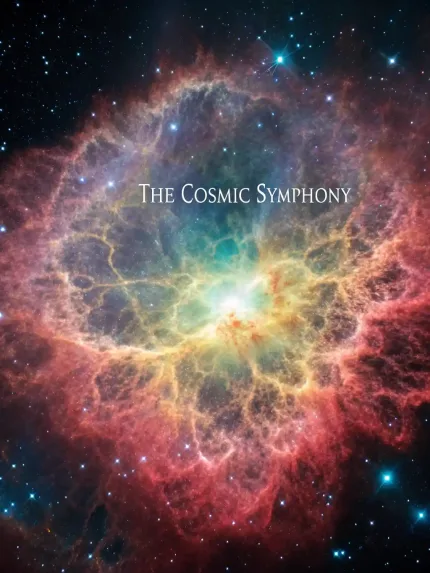
The Cosmic Symphony: Exploring Supernovae and Stellar Evolution through Real-Time Observations
Explore the life and death of stars in "The Cosmic Symphony: Exploring Supernovae and Stellar Evolution through Real-Time Observations." Discover real-time cosmic events, the science behind stellar explosions, and how supernovae shape galaxies. Perfect for space enthusiasts, amateur astronomers, and curious minds.
Reviews
There are no reviews yet.